The "Uniform Cylinder" Fallacy of Weather Apps
When a mainstream weather app tells you it is 57°F (14°C) with a 10 mph breeze, its algorithms rely on thermodynamic models that assume human beings are uniform thermal cylinders.
In reality, human thermal regulation is radically asymmetrical. Your body does not heat or cool evenly. While your chest and back generate immense metabolic heat during a brisk walk, your wrists, neck, and ankles lose heat rapidly through superficial vascular beds.
The Vasoconstriction Paradox: If your neck and hands are exposed to 50°F (10°C) crosswinds, your nervous system triggers whole-body peripheral vasoconstriction. You feel freezing cold—even if you are wearing a bulky winter parka that is causing your chest to sweat.
The 6 Biological Thermal Zones Decoded
Modern apparel science divides the human body into 6 distinct microclimate management zones:
High vascularity with minimal subcutaneous fat. An unprotected neck can account for up to 20% of convective body heat loss. Light knit scarves or mock-necks prevent systemic shivering reflexes.
Vital organ homeostasis center. Highly prone to overheating and moisture accumulation. Requires breathable, moisture-wicking natural fibers (Supima cotton or fine merino) rather than non-breathable synthetic shells.
High surface-area-to-mass ratio. Exposed to lateral wind chill while walking. Benefits from structured overshirts or sleeve lining that block wind without adding core bulk.
Primary site for vasoconstriction. Cold wrists cool the radial artery blood returning to the heart. Ribbed knit cuffs provide disproportionate warmth with zero added weight.
Large quadricep and hamstring muscle groups generate constant kinetic heat when walking. Medium-weight wool trousers or 12oz denim prevent wind cutting while venting muscle heat.
Ground conduction & peripheral circulation terminus. Merino wool socks regulate temperature and prevent clammy moisture far better than synthetic athletic socks.
Cold-Sensitive vs. Heat-Tolerant Biotypes
Why do two colleagues walk into the same 65°F (18°C) conference room with one shivering and the other asking for the AC?
❄️ Type A: Cold-Sensitive Extremities
Lower basal peripheral circulation. Blood vessels in hands and feet constrict quickly under 60°F (15°C).
Layer Strategy: Insulate neck (Z1) and wrists (Z4) first. A lightweight vest over a knit allows core breathing while maintaining vascular warmth.🔥 Type B: High-Metabolic / Heat-Prone
High muscle mass or elevated resting metabolic rate. Quickly sweats when wearing dense outer coats.
Layer Strategy: Keep core (Z2) in lightweight breathable natural fibers. Use unbuttoned outer chore jackets with open cuffs for maximum airflow.The Micro-Zoned Layering Solution: Gilets & Vests
Once you understand thermal zones, the timeless appeal of the down vest (gilet) becomes scientifically obvious:
Why the Vest Is the Ultimate Thermal Instrument
A gilet insulates the Thoracic Core (Zone 2) where vital organs reside, preventing blood from leaving your extremities, while leaving the Arms (Zone 3) completely unencumbered to vent excess heat during physical exertion.
Paired with a structured cotton-gabardine overshirt or merino knit, a vest delivers the thermal protection of a heavy coat with only 35% of the bulk.
How Layer Calibrates Your 6-Zone DNA
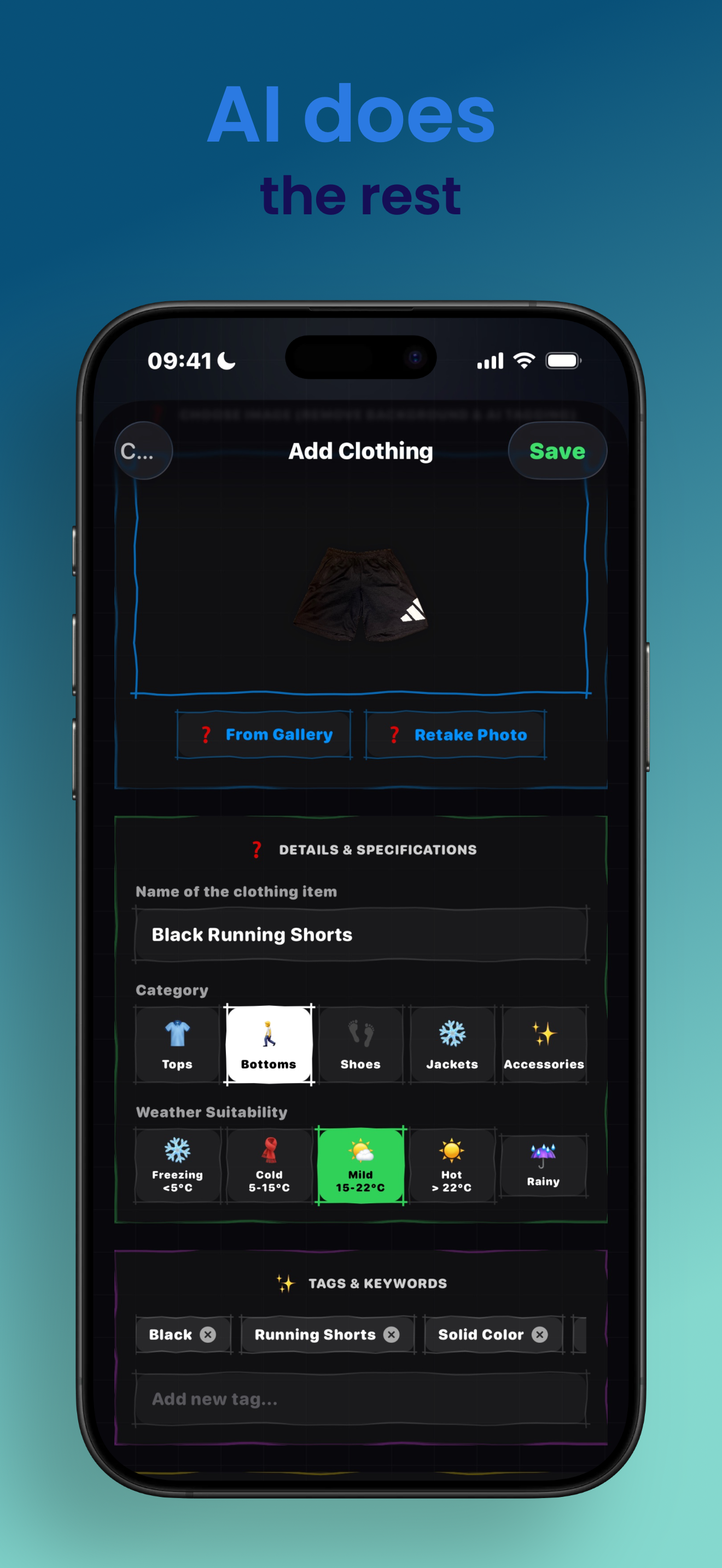
The Layer iOS App is the first wardrobe platform engineered specifically around biological thermal mapping:
- Custom Biometric Sliders: Set your individual sensitivity for core, extremities, and head.
- Hourly Vector Synthesis: Calculates wind direction, solar radiation angle, and relative humidity against your specific tolerance levels.
- Zero-Overheating Outfits: Recommends combinations from your closet that protect vulnerable zones without suffocating your core.