The 50°F to 70°F (10°C to 21°C) Dilemma
Every spring and autumn, millions face the same daily wardrobe dilemma: leave home at 7:30 AM shivering in crisp 50°F (10°C) winds, only to find themselves trapped in an uncomfortably heavy wool coat when the afternoon sun pushes the thermometer to 68°F (20°C).
This diurnal temperature swing—often exceeding 20°F (11°C) within a single 8-hour window—creates severe cognitive friction. Standard weather apps simply give you a single "High / Low" number that provides zero context on how radiant solar heat, wind speed, and humidity interact with your clothing fabrics.
The Core Rule of Transitional Dressing: Never dress for the peak temperature or the morning low. Dress with a removable thermal buffer engineered to adapt seamlessly to 3 microclimates throughout the day.
The 3-Tier Layering Architecture
Rather than relying on one bulky outer garment, elite styling and outdoor performance engineering rely on three interdependent layers:
Layer 1: Base Layer (Microclimate Moisture Regulation)
Direct skin contact. Must prioritize moisture vapor transmission and softness. Ideal: 200g/m² Supima cotton, silk-cotton blends, or lightweight 17.5-micron merino wool tees.
Layer 2: Mid Layer (Removable Thermal Buffer)
Traps still air for insulation without trapping perspiration. Ideal: Heavyweight cotton overshirts, waffle knits, fine-gauge merino cardigans, unlined chore jackets, or structured quarter-zips.
Layer 3: Outer Shell (Environmental & Convection Barrier)
Blocks convective wind chill and moisture while remaining easily packable. Ideal: Cotton-gabardine trench coats, water-repellent macintosh jackets, or unlined technical blazers.
The Exact Temperature Breakdown Matrix
Use this definitive blueprint to pick your combination based on the exact temperature window:
| Temperature Range | Base + Mid Layer | Outer Shell & Bottoms | Key Styling Advice |
|---|---|---|---|
|
50°F – 55°F (10°C – 13°C) |
Merino crewneck knit + Supima cotton undershirt | Wool trench / Harrington jacket + Heavyweight chinos / Selvedge denim | Protect neck and wrists; convective wind chill is at its peak. |
|
56°F – 62°F (13°C – 17°C) |
Structured overshirt + Premium heavyweight t-shirt | Light macintosh / Denim jacket + Relaxed wool trousers | Unbutton the overshirt when indoors to immediately vent heat. |
|
63°F – 70°F (17°C – 21°C) |
Breathable long-sleeve tee or linen-cotton button-up | Optional draped cardigan / unlined overshirt + Cotton trousers | Mid-layer can be carried or tied over shoulders by mid-afternoon. |
How Layer Automates Transitional Weather Styling
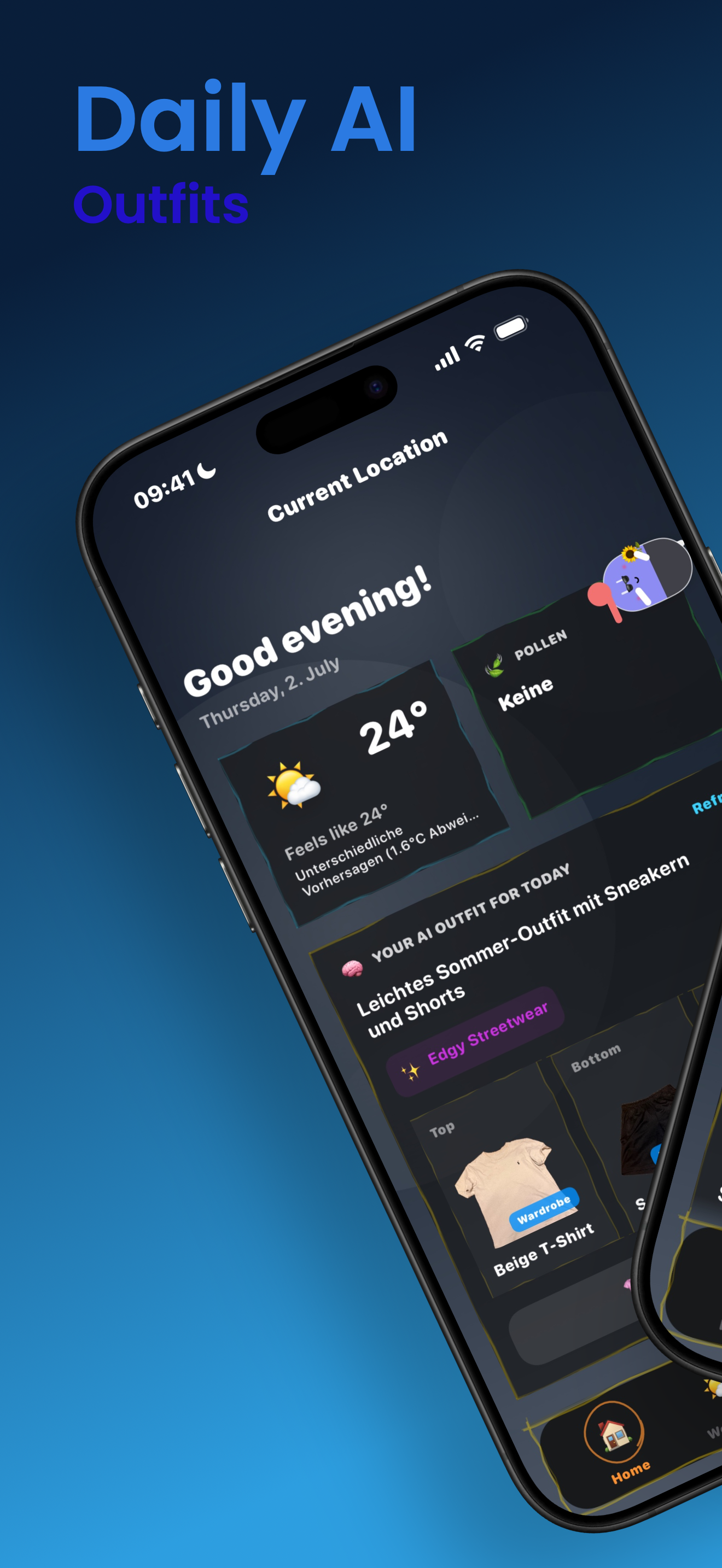
Instead of constantly checking radars and manually testing combinations, Layer leverages native iOS intelligence to calculate your optimal outfit before your morning alarm rings:
1. Triple-Model Meteorological Synthesis
Layer aggregates ECMWF, GFS, and DWD forecasts to evaluate humidity, solar index, and wind vectors up to 168 hours ahead.
2. Biological Thermal Zone Mapping
Calibrates 6 individual body zones so heat-sensitive individuals receive lighter upper layers, while cold-prone users get reinforced core insulation.
3. Zero-Latency Wardrobe Integration
Matches outfits strictly against your digitized clothes using on-device Apple Neural Engine recognition.